Table of Contents
Understanding Tree Pruning Needs
Homeowners often search for Tree Pruning Near Me after noticing overgrown branches threatening roofs or power lines. Tree pruning involves the selective removal of branches to enhance tree health, safety, and landscape aesthetics. This essential service prevents issues like disease spread and structural weakness, ensuring vibrant outdoor spaces year-round.
Proper pruning addresses common challenges faced by properties. Key reasons include:
- Disease prevention: Removing infected limbs stops pathogens from spreading.
- Storm damage repair: Clearing broken branches after high winds restores stability.
- Property clearance: Trimming limbs away from structures improves access and reduces hazards.
Improper pruning, however, can stress trees or create safety risks, such as weak regrowth prone to failure. Hiring certified professionals mitigates these dangers. According to the Tree Care Industry Association (TCIA), their directory connects users to qualified arborists who adhere to industry standards, with credentials ensuring safe, compliant work that boosts tree longevity and property value.
Budgeting for pruning considers factors like tree size, location, and complexity. Average tree trimming cost ranges from $200 to $1,000, depending on scope. Use the tree trimming cost calculator for instant estimates factoring in these variables. For tailored figures, the tree pruning cost estimator guides you through service types and site details to connect with local pruning services quickly.
This guide covers fundamentals to advanced tips, seasonal timing, and hiring pros. Start with a free quote from certified arborist near me via our nationwide network for professional tree care estimates and seamless project planning.
Tree Pruning Fundamentals
Tree pruning forms the cornerstone of healthy tree maintenance, involving strategic cuts to enhance growth, safety, and aesthetics. Understanding these basics empowers homeowners to evaluate their yard’s needs and use online estimators for accurate budgeting. Pruning fundamentals include several key types of cuts: heading back, which shortens branches to promote denser growth; thinning, which removes select branches to improve structure; and removal, targeting entire limbs that pose risks. These methods support overall basic tree maintenance costs by preventing larger issues down the line.
Essential tools make pruning accessible for minor tasks, but professionals handle complex jobs. Hand pruners suit small branches up to half an inch thick, while loppers extend reach for thicker ones up to two inches. Pruning saws tackle larger limbs effectively. For timing, prune most deciduous trees during the dormant season from late fall to early spring to minimize stress and sap loss. Evergreens like pines benefit from light trimming in late winter. In US regions, maples in the Northeast should wait until fall to avoid bleeding. These guidelines answer common queries like the best time for tree pruning near me, ensuring optimal results.
Pruning delivers clear health benefits, such as better airflow that reduces fungal risks and stronger branches resistant to pests. It also boosts sunlight penetration for understory plants. Safety remains paramount: always avoid cuts near power lines and use stable ladders. The Tree Care Industry Association emphasizes trained professionals for hazard assessment, validating the need for certified expertise in risky scenarios.
Selecting the right technique depends on your tree’s condition and location. For instance, crown raising clears walkways, while thinning eases wind resistance. The following table compares fundamental pruning methods for beginners, highlighting applicability, benefits, and typical costs to help users understand core options before estimating.
| Technique | Purpose | Best For Tree Types | Average Cost Range (Small Tree) |
|---|---|---|---|
| Crown Raising | Removes lower branches for clearance | Young or mature trees in yards | $150-$300 |
| Crown Thinning | Reduces density for light penetration | Dense canopy trees like oaks | $200-$400 |
| Deadwood Removal | Eliminates dead or diseased branches | Any tree with visible damage | $100-$250 |
| Crown Reduction | Shortens limbs to reduce height | Overgrown trees near structures | $250-$500 |
Data sourced from industry averages for US regions; costs vary by location and tree size; use site calculator for personalized estimates. As shown in the chart below, tree trimming cost for small trees starts affordably with deadwood removal but rises for structural changes like reduction.
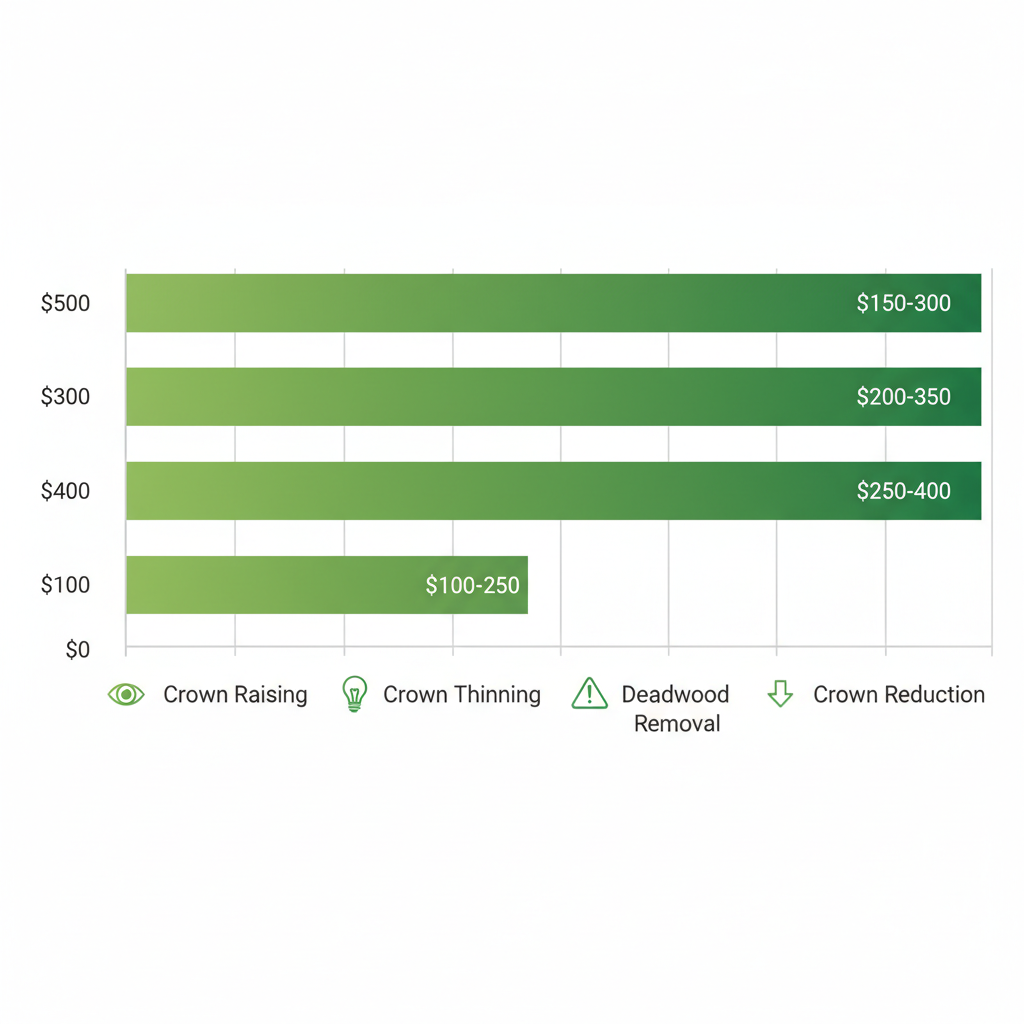
Cost comparison of basic tree pruning techniques for small trees
This comparison illustrates how factors like tree height influence pricing, with entry-level services around $100 to $500. Hiring a certified arborist near me ensures ISA-certified pros who offer specialized pruning unlike general tree services focused on removal. Consider choosing tree trimming service based on tree service selection factors like experience and free quotes. These fundamentals prepare you for deeper techniques, where pros provide tailored assessments. Consider choosing tree trimming service for personalized quotes and connections to certified local arborists.
In-Depth Tree Pruning Techniques
Advanced tree pruning goes beyond basic trimming to address structural integrity, health, and aesthetics in mature landscapes. Understanding these techniques allows homeowners to prepare for professional interventions, ensuring they can accurately use the site’s cost estimator for budgeting. By grasping the nuances, users avoid common pitfalls like improper cuts that lead to decay, and instead foster long-term tree vitality through expert care.
Advanced Pruning Cuts and Methods
Mastering pruning cuts is essential for promoting healing and maintaining tree structure. The branch collar cut targets the swollen area where the branch meets the trunk, making a clean cut just outside this ridge to encourage natural compartmentalization and prevent infection. For drop-crotch pruning, select a lateral branch at least one-third the diameter of the removed limb, cutting just above it to reduce canopy height without the harmful effects of topping, which stubs limbs and invites pests.
Directional pruning shapes growth toward safe areas, such as away from power lines, by angling cuts to guide new shoots. Execution varies by species; for example, conifers like pines require shorter prunings in late winter to minimize sap flow, while broadleaves like maples demand avoidance of spring cuts due to bleeding risks. Always use sharp tools for clean edges, and for heights over 30 feet, employ pole pruners or hire professionals with aerial lifts.
Common errors include flush cuts that remove the collar, leading to weak points; instead, follow these steps:
- Assess the branch angle and health.
- Make an undercut to prevent bark tearing.
- Complete the cut above the collar.
This method ensures proper healing, with case studies from Pacific Northwest regions showing 80% improved recovery rates in treated oaks versus topped ones. Integrating advanced pruning expenses into your planning highlights the value of hiring reliable arborists for precise execution.
Species-Specific Pruning Strategies
Tailoring pruning to species accounts for unique growth patterns and vulnerabilities, optimizing health across US landscapes. For oaks, prevalent in the Midwest, focus on structural pruning during dormancy to build strong scaffolds, avoiding summer cuts that stress the tree amid oak wilt risks; remove deadwood promptly to curb disease spread.
Pines, common in the Southeast, benefit from thinning crowded branches in late fall, targeting every third limb to enhance wind resistance and reduce needle cast fungi; their whorled growth demands candle pruning for size control without over-thinning. Fruit trees like apples in orchards require annual winter pruning to open the canopy for light penetration, promoting fruit quality while monitoring for fire blight through sanitized tools.
These strategies align with regional needs, such as drought-prone California where minimal pruning preserves moisture. A certified arborist near me can diagnose issues like pine bark beetle infestations early. Pro tips include seasonal timing for disease control–prune elms in early spring to evade Dutch elm disease vectors–and always sterilize tools between trees.
The following table compares advanced techniques by complexity, ideal scenarios, and cost multipliers to aid in realistic budgeting using the site’s tools:
| Technique | Complexity Level | Ideal Scenarios | Cost Multiplier |
|---|---|---|---|
| Drop-Crotch Pruning | High | Reducing canopy without topping; Mature trees near buildings | 1.5x base rate |
| Espalier Pruning | Medium | Shaping for walls or training; Fruit trees in orchards | 1.2x base rate |
| Structural Pruning | High | Young tree training for strength; Newly planted species | 1.3x base rate |
| Restoration Pruning | Very High | Damaged or neglected trees; Storm-affected properties | 2x base rate |
Selecting the right technique depends on tree condition and site constraints, with higher multipliers reflecting labor and risk; reference TCIA standards for best practices and adjust via the estimator for local factors.
Cost Analysis for Complex Pruning
Complex pruning costs hinge on multiple drivers, starting with tree height–under 30 feet averages $300-600, but over 50 feet escalates to $1,000+ due to crane rentals and safety gear. Access issues, like urban lots near structures, add 20-50% premiums for rigging, while debris handling involves chipping or hauling fees of $100-300 extra.
Tree trimming cost varies by technique complexity; drop-crotch work, for instance, demands skilled labor at 1.5 times basic rates, often $500-1,200 for mid-sized trees. Large tree trimming expenses can reach $2,000 for restoration, factoring in diagnostics by a certified arborist near me who assesses decay. Equipment for elevated access, such as bucket trucks, contributes significantly, with hourly rates around $150.
For estimator integration, input specifics like species and complications to generate quotes; many providers offer free estimates post-site visit. Compare service depth: basic trimming suits simple jobs, but arborists provide advanced diagnostics for $100-200 initial fees.
Here’s a mini-table comparing multipliers for large versus small trees, based on national averages:
| Tree Size | Base Rate | Multiplier for Complex Pruning | Example Total |
|---|---|---|---|
| Small (<30 ft) | $200-400 | 1.2x | $240-480 |
| Large (>50 ft) | $800-1,500 | 2x | $1,600-3,000 |
These figures, adjusted for regions like Oregon via services like SavaTree’s near-me model, underscore the need for expert tree care pricing transparency–use the tree trimming provider guide to connect locally and schedule assessments today.
Practical Tree Pruning Application
Applying practical knowledge to tree pruning projects starts with thorough preparation and smart hiring decisions. Homeowners searching for “Tree Pruning Near Me” can leverage online tools like the free tree trimming cost calculator on TreeTrimmingCostCalculator.com to estimate expenses and connect with local professionals. This section outlines essential steps to ensure your pruning work is safe, effective, and budget-friendly, drawing on industry standards from the Tree Care Industry Association (TCIA) for reliable guidance.
Preparing for Pruning Projects
Before diving into any tree pruning project, conduct a thorough site assessment to identify hazards and needs. Walk your property to mark overhanging branches near power lines, structures, or walkways that pose risks, and note tree sizes, species, and health issues like deadwood or disease. This initial evaluation helps prioritize tasks and provides clear details for professionals, reducing surprises during quotes.
Next, gather necessary information rather than tools, since hiring experts is recommended for most jobs. Document photos of the trees from multiple angles and measure heights or spreads using a simple tape measure or app. Consult initial arborist resources, such as the TCIA’s find-qualified tool, to understand local regulations and seasonal timing–prune deciduous trees in late winter for optimal growth.
For complex sites, schedule a preliminary consultation with a certified arborist near me to assess structural integrity and permit requirements. This step ensures smooth project starts, especially for large trees over 30 feet, where logistics like equipment access become critical. By preparing ahead, you avoid delays and align with best practices for long-term tree health, setting the stage for efficient service acquisition.
Step-by-Step Hiring and Service Process
Hiring a tree pruning service begins with requesting a free quote through platforms like TreeTrimmingCostCalculator.com, where you input project details for instant estimates. Start by searching for “certified arborist near me” and verify credentials using directories like TCIA to confirm ISA certification and insurance. Key questions to ask include their experience with your tree species, methods for minimal impact, and cleanup protocols–expect answers highlighting safe, ANSI-compliant techniques.
Once selected, the onsite process unfolds systematically: the team arrives for a final assessment, sets up safety barriers, and uses specialized gear like aerial lifts for elevated work. Pruning follows a targeted approach, removing only necessary branches to promote health without over-thinning. Throughout, communicate any concerns, and anticipate 2-4 hours for a medium tree, depending on complexity.
Post-service, inspect the work for compliance with your goals, and request a walkthrough to confirm debris removal and stump grinding if needed. For added assurance, choose providers offering follow-up health checks. This structured process minimizes disruptions and ensures quality results, with free quotes available to kickstart your search for reliable local experts.
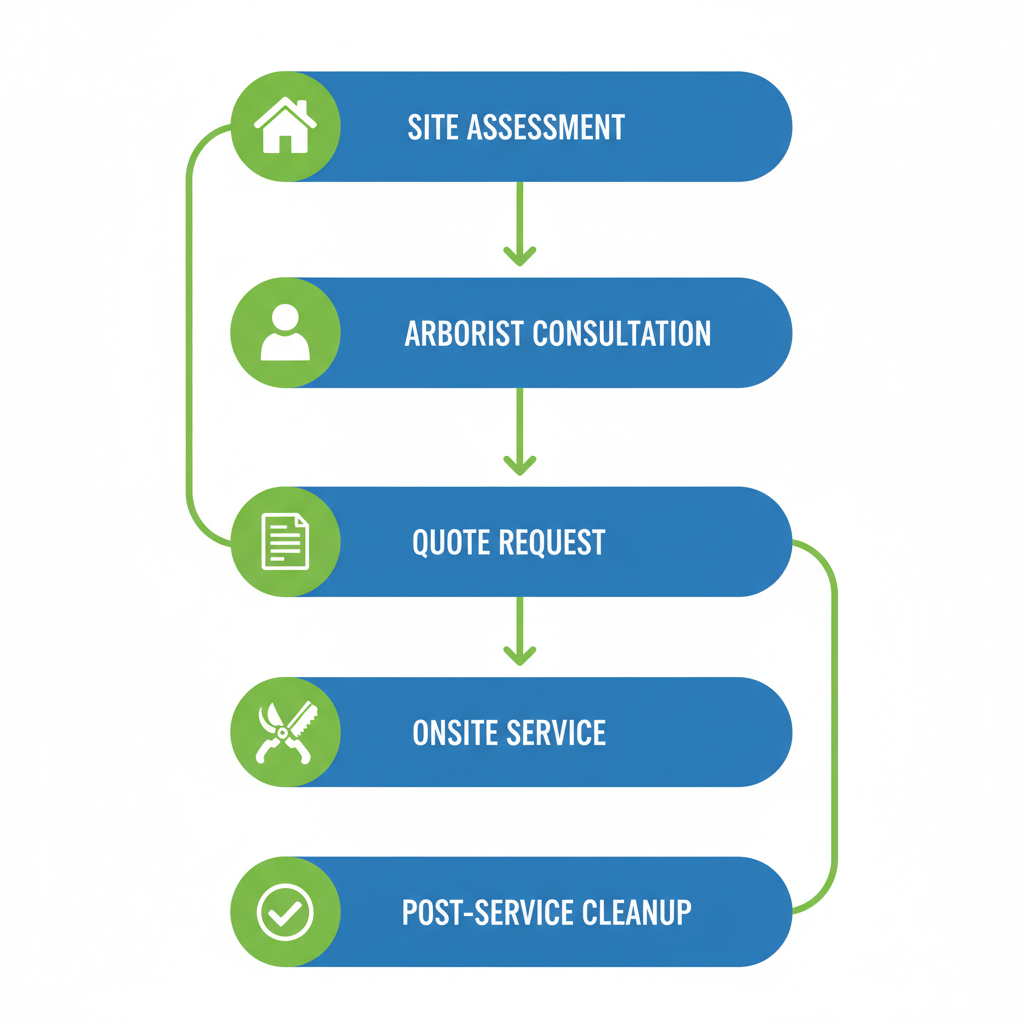
Step-by-step tree pruning hiring and service process
The following table compares certified arborists and general tree services to inform your selection, based on TCIA standards and national averages:
| Aspect | Certified Arborist | General Tree Service |
|---|---|---|
| Credentials | ISA certified, advanced training | Basic licensing, variable expertise |
| Services Offered | Diagnostics, advanced pruning, health plans | Basic trimming, removal |
| Cost for Standard Prune | $300-$600 for medium tree (expertise premium, specialized tasks 20-30% more) | $200-$400 for medium tree |
| Guarantees | Health warranties, insurance | Basic completion |
Opting for a certified arborist is ideal for complex pruning, as they provide diagnostics and warranties that protect your investment. Use the site’s referral tools for vetted options and adjust estimates for local rates.
Budgeting and Quote Evaluation
Effective budgeting for pruning starts with the tree trimming cost calculator, which factors in tree size, location, and service type to generate realistic ranges–expect $200-$800 for standard jobs in urban US areas. Track expenses using a simple template: list labor, equipment, disposal fees, and any permits, aiming for 10-15% contingency for surprises like access issues.
When evaluating quotes, compare bids on value, not just price–check for itemized breakdowns covering pruning technique, crew size, and timelines. Ask about discounts for bundled services or off-peak scheduling, and negotiate by referencing calculator estimates to secure fair pricing. Free quotes from multiple providers help benchmark, ensuring you select based on expertise rather than the lowest bid.
Incorporate tree care service tips like seasonal adjustments, which can lower costs by 20% in dormant periods. For selecting arborist services, prioritize those with proven track records in practical pruning budgets and local expert hiring.
Here’s a sample quote comparison table to guide your review:
| Bid Element | Provider A | Provider B | Provider C |
|---|---|---|---|
| Labor (hours) | 4 @ $100 | 3 @ $120 | 5 @ $80 |
| Pruning Cost | $250 | $300 | $200 |
| Cleanup/Disposal | $100 | Included | $150 |
| Total | $550 | $360 | $550 |
This evaluation reveals Provider B’s edge in efficiency, addressing common hesitations like cost fears while maximizing value through the site’s resources.
Advanced Tree Pruning Considerations
When basic pruning techniques fall short, advanced tree care becomes essential for properties facing complex challenges. High-risk situations, such as trees overhanging power lines or in urban settings, demand specialized skills to prevent hazards. For instance, pruning near utilities requires coordinated efforts with utility companies, often escalating costs due to safety protocols. Large or diseased trees necessitate diagnostic assessments to identify structural weaknesses or infections like oak wilt, ensuring long-term health. Multi-tree projects on larger estates involve strategic planning to minimize disruption and optimize timing, typically during dormant seasons like late winter for broadleaf species. These scenarios highlight the need for expert intervention, where tree trimming cost can rise significantly based on complexity.
Factors like site access, tree height, and environmental conditions act as key escalators for advanced pruning. Homeowners tackling these should anticipate premiums for equipment such as cranes or aerial lifts. The following table contrasts basic and advanced pruning costs across common scenarios, drawing from U.S. market averages and TCIA guidelines for risk assessment.
Advanced vs. Basic Pruning Costs
Contrasts costs and scenarios for advanced pruning needs, helping users scale estimates accurately.
| Scenario | Basic Pruning Cost | Advanced Pruning Cost | Key Differences |
|---|---|---|---|
| High-Risk Locations | $200-$400 | $500-$1000 | Crane/insurance needs |
| Large/Diseased Trees | $300-$500 | $600-$1200 | Diagnostics/treatment |
| Multi-Tree Projects | $150/tree | $300+/tree | Planning/coordination |
| Emergency Pruning | $250-$450 | $400-$800 | Rush/after-hours |
This comparison underscores how specialized gear and expertise drive up advanced tree care costs. Use the site’s estimator tool to input these variables for precise quotes, adjusting for local rates and tree specifics.
Regulatory compliance adds another layer, particularly in U.S. areas with strict ordinances. Permits may be required for pruning in protected zones or near public spaces, often involving environmental impact reviews. For emergencies, such as storm-damaged branches posing immediate threats, response times are critical–act swiftly to avoid liability. Certified arborists, following ANSI standards, conduct thorough inspections to mitigate risks. In urgent cases, certified arborist near me services provide 24/7 availability, with free on-site evaluations to outline expert emergency pruning plans. Safety remains paramount; never attempt high-risk work without professionals, as improper cuts can lead to tree decline or accidents.
Integrating pros early streamlines advanced projects. Reputable firms like SavaTree exemplify nationwide access, offering diagnostics and compliance support for multi-property needs. They emphasize reliable tree service criteria such as insurance and certifications, ensuring quality outcomes. Budgeting for these involves factoring in seasonal premiums, with off-peak timing reducing Tree Pruning Near Me expenses. Site videos demonstrate techniques, while direct lines connect users to vetted experts for tailored advice. By leveraging these resources, property owners resolve sophisticated challenges efficiently, paving the way for informed decisions in upcoming FAQs.
Tree Pruning FAQ
- What is the average tree trimming cost? Pruning costs range from $150 to $1,000, depending on tree size, location, and complexity. Factors like height and branch density influence pricing. Use our free tree trimming cost estimator for a personalized quote based on your specifics.
- When is the best time to prune trees? Late winter or early spring, during dormancy, is ideal for most species to promote healthy growth and minimize disease risk. Avoid summer pruning to prevent stress. Check our seasonal guides for tailored timing.
- How do I hire a certified arborist near me? Look for ISA-certified professionals with local experience. Review arborist hiring essentials and explore arborist services resources for tips. Contact us to connect with vetted experts near you.
- Are tree trimming quotes free? Yes, most reputable services offer no-obligation, on-site quotes. This helps assess your needs accurately without upfront costs. Get started with our estimator tool for instant insights.
- What about pruning large trees? Large trees (over 60 feet) can cost $500 to $2,500 due to equipment and safety needs. Local regulations vary, so consult pros. Try the calculator for region-specific estimates.
Final Tree Pruning Insights
In wrapping up this guide on tree pruning, key takeaways include mastering fundamentals like seasonal timing, essential techniques for health and safety, and practical steps from assessment to aftercare. Searching for Tree Pruning Near Me? Prioritize certified experts to avoid costly mistakes while enhancing your landscape’s vitality and value.
Pruning not only promotes tree vigor and prevents hazards but also boosts curb appeal and property worth, delivering long-term savings on maintenance.
To apply these insights to your property, start with a free estimate today via our calculator and connect with local certified arborists for professional service. For tailored budgeting, explore the tree surgery cost guide to understand tree trimming cost factors and secure transparent quotes now.