Short answer: you can generally expect a range near $300 to $800+ per tree, with many simple jobs falling around $250–$500 in some U.S. markets.
Why this matters: tree care choices affect safety, long-term health, and property value. Proper tree crown reduction follows industry guidance to remove no more than 25% of the canopy at once to keep vigor and structure intact.
Cost varies by tree size, species, access, and whether a Certified Arborist is on site. Simple curbside jobs need less crew time and gear, so they land near the low end. Tight yards, nearby power lines, or rigging needs push quotes higher.
Key Takeaways
- You’ll see common U.S. ranges from about $300 to $800+ per tree.
- Providers avoid removing more than 25% of the canopy at one time.
- Size, species, and access drive crew time and final price.
- Certified Arborists may cost more up front but protect long-term health.
- Call 877-570-8917 to connect with vetted local professional tree trimming pros.
What Crown Raising Is and Why It Matters for Your Trees
Removing chosen lower limbs opens space beneath your tree for clear sightlines and safer walkways. This targeted pruning lifts the lower canopy to create pedestrian and vehicle clearance without changing the tree’s overall silhouette.
Defining targeted lifting versus general pruning
Targeted lifting removes select lower branches to reach a typical 6–8 foot pedestrian clearance. General pruning, by contrast, looks across the whole tree to remove dead, damaged, or diseased limbs.
Benefits to health, safety, and property value
- Improves sunlight and airflow through the canopy, which supports tree health and reduces disease pressure.
- Makes mowing and landscaping easier and reduces vehicle and sightline conflicts.
- Reduces risk for people and pets under low limbs, boosting safety near sidewalks and driveways.
- Preserves structure when trained crews use proper collar cuts and reduction pruning techniques.
“Regular tree care helps prevent insect and disease issues while keeping your yard usable and safe.”
If limbs are scraping vehicles or blocking views, call 877-570-8917 to connect with professional tree experts who will assess your site and recommend safe, permitted work—especially when power lines are nearby.
How Much Does Crown Raising Cost
You’ll see a wide U.S. pricing band for lifting lower limbs, driven by local demand and each tree’s unique needs.
Most homeowners receive quotes between $300 and $800+ per tree. In simple settings with easy access, some markets report averages near $250–$500.
Costs rise when a job needs extra time, special rigging, or work near structures and power lines. Older trees or those that haven’t had recent pruning often bring more branches to address and more cleanup time.
Typical price drivers
- Tree size and species influence crew size and equipment needs.
- Location and access (tight yards, fences, pools) may require protective rigging.
- Scope—clearance height, crown shaping, debris hauling, and disposal—affects final bids.
| Scenario | Typical U.S. Range | Notes |
|---|---|---|
| Small ornamental, easy access | $250–$500 | Quick job, minimal cleanup |
| Mature tree near structures | $500–$800+ | Rigging and protection may be required |
| Line‑clearance or restricted drop zone | $600–$1,200 | Specialist crew and permits may be needed |
To compare bids fairly, ask each company for the same clearance height, cleanup method, and disposal terms. When you’re ready to get local estimates, call 877-570-8917 to connect with qualified tree services and professional tree trimming pros in your area.
Key Factors That Influence Your Crown Raising Price
A few practical factors drive how long crews work and what gear they bring to a pruning job. These elements shape bids and help you compare offers more fairly.
Tree size, species, and canopy density: Larger trees and dense canopies add cuts and haul time. Hardwoods with heavy branches often need bigger crews and careful sectional lowering.
- Location and access: Narrow yards, steep slopes, or fragile landscaping increase setup time and equipment needs.
- Proximity to structures or power lines: Work over roofs or near power lines may require sectional lowering and utility coordination to protect property and crews.
- Time since last pruning and overall condition: Long intervals raise debris volume and cleanup, and decay can shift a plan toward reduction pruning or even tree removal.
- Crew, equipment, and Certified Arborist involvement: A licensed arborist adds value by protecting structure and health, and specialized gear can raise the quote.
For reliable, local estimates, contact us at 877-570-8917 to find qualified tree trimming pros in your area.
Crown Raising vs. Tree Topping: Avoid Damaging Your Tree
Topping your trees can seem quick, but it often causes lasting harm that raises future risks. Large, indiscriminate cuts remove the tree’s energy stores and invite decay. That leads to weak regrowth and more hazard for your property.
Why topping harms tree health and increases long‑term risk
Topping removes a large portion of the upper canopy at once. This triggers fast shoots that attach poorly. Those shoots break more easily in wind and storms.
Large cuts also expose the tree to pests and disease. Over time, you may face more corrective work or even tree removal.
Best‑practice reduction and raising techniques that protect structure
Proper reduction pruning uses selective, smaller cuts back to strong lateral branches. Reputable crews limit removal to about 25% of the canopy in one visit to keep energy reserves and structure intact.
- Retain natural form while improving clearance and light.
- Cut to laterals, not stub back to flush cuts or flat tops.
- Ask providers if they follow modern pruning practices and use a Certified Arborist.
“Correct reduction pruning preserves safety, health, and property value while avoiding the long-term risks of topping.”
| Practice | What it does | Long‑term outcome |
|---|---|---|
| Topping | Removes large upper limbs fast | Weak regrowth, decay, higher storm risk |
| Reduction pruning | Selective cuts to lateral branches | Stable structure, lower failure risk |
| Crown lift (raising) | Removes lower limbs for clearance | Better access and reduced conflicts |
If someone quotes you for topping, call 877-570-8917 to find a professional tree team that protects your investment and avoids damaging tree outcomes.
Safety First: Managing Risk, Power Lines, and Storm Concerns
Public safety rules and weather risks make proper tree work more than a cosmetic choice. When branches hang low over sidewalks or roads, clearance keeps people and cars safe. Municipalities and HOAs often set minimum heights to protect pedestrians and drivers.
Clearance for roads, sidewalks, and vehicles
Removing select low limbs improves sightlines at driveways and intersections. That reduces incidents and liability for your property.
Staging matters: crews place cones, signage, and flaggers when work is near busy streets to keep traffic moving and people safe.
Reducing wind resistance and storm‑related limb failures
Selective thinning and small reduction cuts lower wind sail without overcutting. This reduces the chance of storm damage and emergency removals.
Work near energized conductors requires utility coordination and trained crews. DIY attempts near power lines are unsafe and can increase risk.
“Smart, periodic tree care often costs less than reactive storm cleanup.”
If your trees overhang streets or utilities, call 877-570-8917 to schedule a professional tree safety assessment with qualified crews who follow reduction pruning and safe work practices.
When to Schedule Crown Raising for Best Results
Pick timing that matches your local climate and the growth habits of your trees. Regular, light work keeps limbs from creating hazards and reduces future heavy cuts.
Suggested intervals and seasonal timing
Many trees benefit from structural maintenance every 3–5 years. Some properties use a 5–7 year window for larger lifts.
Dormant-season work often gives better visibility and lowers pathogen risk, but safety jobs proceed any time conditions allow.
How growth rate and species change the schedule
Fast-growing shade trees may need attention near the 3-year mark. Slower species can wait longer between visits.
- Younger trees respond well to early training, so future care is simpler and cuts are smaller.
- Storms, nearby construction, or irrigation changes may require an out-of-cycle check.
- Watch for low branches brushing vehicles, blocked sightlines, or repeated headroom problems as signals it’s time.
“Light, regular pruning protects long-term health and keeps your yard usable.”
For tailored advice and scheduling, call 877-570-8917 to connect with a professional tree team that can plan maintenance for your trees and property.
Tree Health Benefits Beyond Clearance
Selective lifting of lower limbs can shift a tree’s energy toward stronger upper growth and better form.
Removing a few strategic branches improves airflow and sunlight inside the canopy. That supports healthier foliage and lowers disease pressure.
Increased light also helps lawns and garden beds. You get a healthier microclimate around patios and entries. Turf stays drier and less prone to fungus.
Thoughtful reduction pruning avoids over‑removal so the tree keeps carbohydrates for recovery. It reduces rubbing and crossing branches that create wounds.
- Better airflow reduces disease and improves leaf vigor.
- More light boosts understory plants and turf health.
- Less mower damage lowers entry points for pests and infection.
| Benefit | What it does | Outcome |
|---|---|---|
| Airflow | Removes shading lower limbs | Less moisture, fewer pathogens |
| Light to turf | Increases sun on lawn and beds | Stronger turf, fewer damp spots |
| Structural balance | Selective reduction pruning | Stable growth, fewer failures |
“A phased, health-first plan protects long-term vigor and your property.”
For a tailored plan from a professional tree team, call 877-570-8917 to find qualified tree trimming pros in your area.
Related Pruning Techniques: Crown Reduction, Thinning, and Cleaning
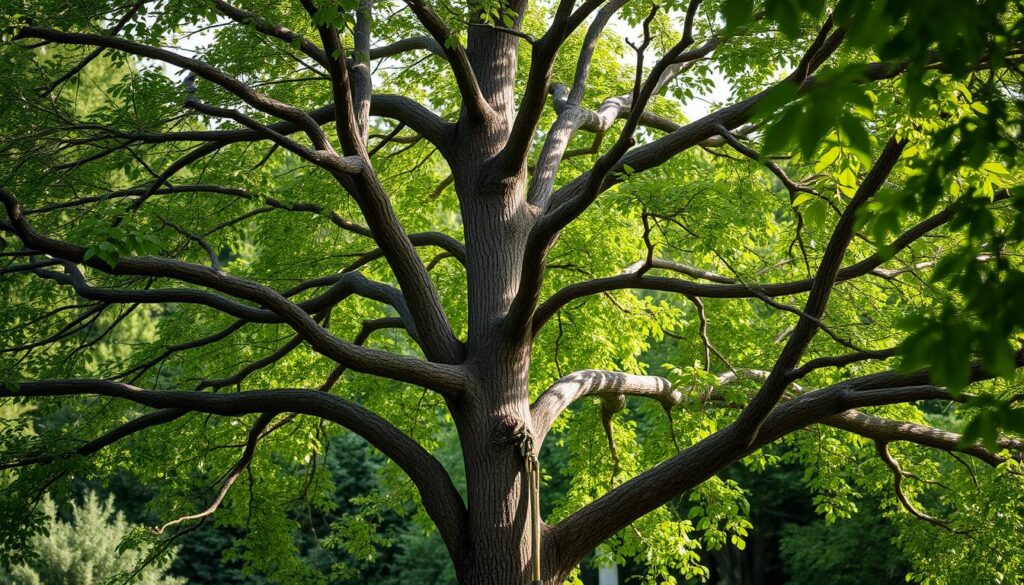
Choose reduction when a tree’s canopy grows beyond its intended footprint. Reduction pruning shortens leaders and large limbs back to strong laterals. This lowers overall size while keeping structure intact and reduces interference with roofs or power lines.
When reduction pruning is the better choice
Pick reduction if upper growth crowds buildings, limits clearance, or creates a heavy canopy that invites failure. It’s often wiser than repeated raising when the canopy size is the issue.
Thinning and cleaning to improve health and safety
Thinning removes select interior branches to boost light and airflow. That lowers disease risk and reduces wind sail.
Cleaning removes dead, diseased, or damaged branches. This cuts failure risk over patios and paths and helps overall tree health.
“A measured, professional pruning plan preserves structure and reduces future hazards.”
- Discuss your site goals, desired canopy shape, and clearance targets before work.
- Trees near power lines may need combined techniques and utility coordination.
- Severe decay or structural defects can lead to bracing or tree removal recommendations.
To match technique to your needs and budget, call 877-570-8917 for a local assessment from a professional tree team.
DIY Cautions: Why Hiring a Professional Tree Service Is Smarter
A single wrong cut or slip can turn a weekend project into major property damage.
DIY tree care sounds appealing, but falls, kickback injuries, and dropped limbs are real hazards. You risk hurting yourself and damaging roofs, fences, or vehicles.
Incorrect cuts invite decay and spur weak regrowth. That increases the chance of future failure and may lead to tree removal later.
- Common tree trimming DIY mistakes include climbing spurs, poor ladder use, and cutting above shoulder height.
- Professionals use rope rigging, friction devices, and controlled lowering to protect property.
- Licensed crews carry liability insurance and worker’s comp to shield you if something goes wrong.
“When utilities or large limbs are involved, never try this yourself — the risk of electrocution and major damage is too high.”
| Risk | DIY | Professional |
|---|---|---|
| Safety gear & training | Often lacking | Standard and certified |
| Rigging & lowering | Improvised | Engineered techniques |
| Long‑term tree health | Incorrect cuts cause decay | Reduction pruning and care preserve structure |
For safe outcomes and vetted tree services, call 877-570-8917 to find qualified professional tree crews and avoid damaging tree or property risks.
Hiring Professional Tree Services You Can Trust
A clear, written plan separates a trusted tree service from a risky weekend job.
Start by verifying credentials. Look for ISA Certified Arborists or TCIA affiliation and ask for current liability and workers’ comp certificates that list your property.
Working with Certified Arborists and verified insurance
Make sure an on-site arborist evaluates species traits, past cuts, decay signs, and nearby power lines. This protects your health safety and reduces the chance of accidental tree removal or damage.
What a proper assessment and reduction plan includes
A written scope should list clearance heights, reduction pruning limits, cut locations, and expected appearance. It should also note cleanup standards, turf protection, and whether permits or HOA notifications may require coordination.
How to compare quotes and scope—not just price
Ask each company to quote the same clearance, debris handling, and traffic control. That helps you compare offers by scope, not by sticker price.
“Hiring professional tree crews that document work and show proper insurance protects your property and the long-term health of your trees.”
Call 877-570-8917 to connect with vetted professional tree services and find qualified tree trimming pros in your area.
Aftercare and Maintenance: Keep Your Tree Healthy for Years
What you do in the months after pruning matters as much as the cut itself. Proper aftercare helps the tree recover and reduces the chance of disease or weak regrowth.
Post-pruning care, watering, and monitoring
Water smart: give deep, infrequent soaks during dry spells rather than daily shallow watering. This promotes strong roots and steady recovery.
Mulch correctly: apply 2–3 inches of mulch but keep it off the trunk flare. Mulch conserves moisture and moderates soil temperature.
- Watch for stress signs: sudden leaf drop, tip dieback, or unusual insect activity.
- Avoid heavy fertilizer soon after pruning — that can spur weak, fast shoots.
- Inspect previous cut sites for proper callus formation and stability.
“Annual checks catch problems early and often cost less than big corrective work later.”
| Action | When | Why it matters |
|---|---|---|
| Deep watering | Dry periods, monthly | Supports root recovery and canopy health |
| Mulch application | After pruning, refresh yearly | Retains moisture and protects roots |
| Routine inspection | Every 2–3 years (or after storms) | Prevents large interventions and preserves structure |
If you see decay fungi, oozing, or other worry signs, call a professional tree expert. For a personalized maintenance plan, call 877-570-8917 to find qualified tree trimming pros in your area.
Get a Fair, Local Price Today
A fair price begins with a written scope that sets clearance goals and disposal terms. Get clear estimates so you can compare apples to apples. Ask each provider to list clearance height, cleanup, and haul-away in writing.
U.S. price notes: many crown jobs start near $300 and can exceed $800 for complex sites. In easier settings, some markets show averages around $250–$500 for accessible trees.
Contact us at 877-570-8917 to find qualified tree trimming pros in your area
- Call 877-570-8917 now and we’ll connect you with reputable local providers for fast, no‑obligation estimates.
- You’ll get help aligning scope so each quote includes the same clearance goals, debris handling, and cleanup standards to make sure comparisons are fair.
- We’ll match you with crews experienced in safe crown work near driveways, sidewalks, and building edges.
- Ask for options that fit your budget—single‑visit completion or phased work to balance price and results.
- You can request Certified Arborist involvement for assessments and reduction pruning plans that protect structure and appearance.
- We’ll help schedule around your calendar and local weather so crews arrive ready to work.
- Get guidance on special access notes—gates, pets, sprinkler heads—so teams come prepared.
- If you manage multiple sites, we can coordinate bundled visits to save time and streamline service.
- We’ll confirm providers carry proper insurance and can supply documentation on request.
- Your local team will explain safety steps, from rigging to traffic controls, so you feel confident before work begins.
“Transparent bids let homeowners choose smart tree care that protects their property and long‑term value.”
Conclusion
A few well-timed cuts can prevent big problems and keep your yard usable for years.
Thoughtful tree care lifts low branches for safe passage while preserving a natural, balanced tree crown. Proper reduction and careful pruning protect structure and deliver lasting benefits without topping.
You now know typical U.S. ranges (about $300 to $800+ per tree) and what shifts prices up or down. Use credentials, insurance, and a written scope to compare bids fairly.
If branches already threaten walkways or vehicles, act before storms. For a fast, fair local estimate and trusted guidance, call 877-570-8917 to connect with a professional tree team that keeps your trees healthy for years.